
Inspect
Inspect is an Ocrolus solution for mortgage lenders that analyzes borrower document data alongside Encompass 1003 application data to uncover discrepancies, surface key insights, and automatically generate loan conditions. This enables lenders to review files more accurately, completely, compliantly, and efficiently.
With Inspect, lenders can:
- Identify discrepancies in borrower information such as names, addresses, loan details, and other fields by comparing borrower documents against the Encompass 1003 application data using exact matching.
- Surface undisclosed information and new records found in borrower documents, such as new employers or accounts not reported on the 1003.
- Detect missing documents needed to support loan applications and flag entities on the 1003 that have no supporting documentation.
- Analyze asset and income data from bank statements and pay stubs against 1003 liabilities to surface red flags such as large deposits, wage garnishments, undisclosed debts, and buy-now-pay-later services.
- Automatically generate and manage conditions from document analysis, 1003 data, and AUS findings, then import them into Encompass with a single click.
- Track document expiration by evaluating tracked documents against Fannie Mae or Freddie Mac age requirements, measured against the estimated closing date, and create conditions for expired or expiring-soon documents directly from the Doc Expiration tab.
- Maintain a complete audit trail of all findings, conditions, and reviewer actions, including who reviewed each item, when, and what resolution was taken.
Navigation
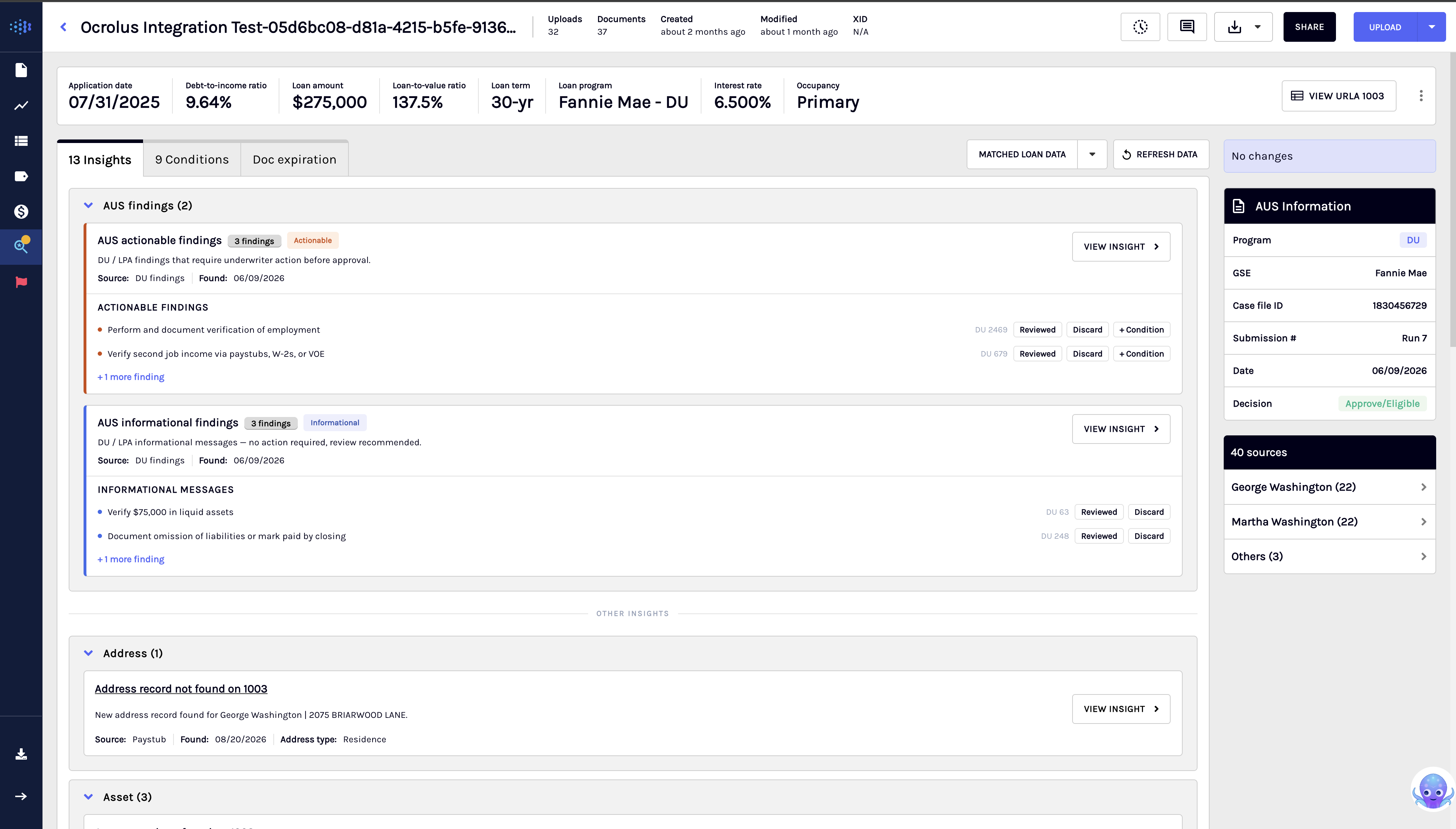
When you open a loan file in Inspect, the interface is organized into the following main tabs:
Provides an overview of the loan file, including 1003 application data, discrepancy detection, and document insights. Use this tab to review the data extracted by Ocrolus and compare it with the Encompass 1003.
Displays auto-generated loan conditions based on document analysis, AUS findings, and GSE guidelines. From this tab, you can review, import conditions into Encompass, or discard them.
Evaluates every tracked document in the loan file against GSE-mandated age requirements,
measured against the estimated closing date. Each document is labeled Valid, Expiring Soon, or Expired. Use this tab to identify stale documents and create conditions to request updated copies before closing.
The Inspect tab provides a consolidated view of the loan file and serves as the foundation for condition generation. At the top of the screen, a loan summary panel displays key data points extracted from the file. You can customize which fields appear in this panel using the toggle controls. The available fields in the Inspect tab are:
| Field | Description |
|---|---|
| Debt-to-Income Ratio | Calculated DTI ratio for the borrower(s). |
| Loan Amount | Total loan amount for the transaction. |
| Loan-to-Value Ratio | LTV based on the appraised value and loan amount. |
| Loan Term | Duration of the loan in months or years. |
| Loan Program | Product type (for example, Conventional 30-Year Fixed). |
| Interest Rate | The note rate for the loan. |
| Occupancy | Primary residence, second home, or investment property. |
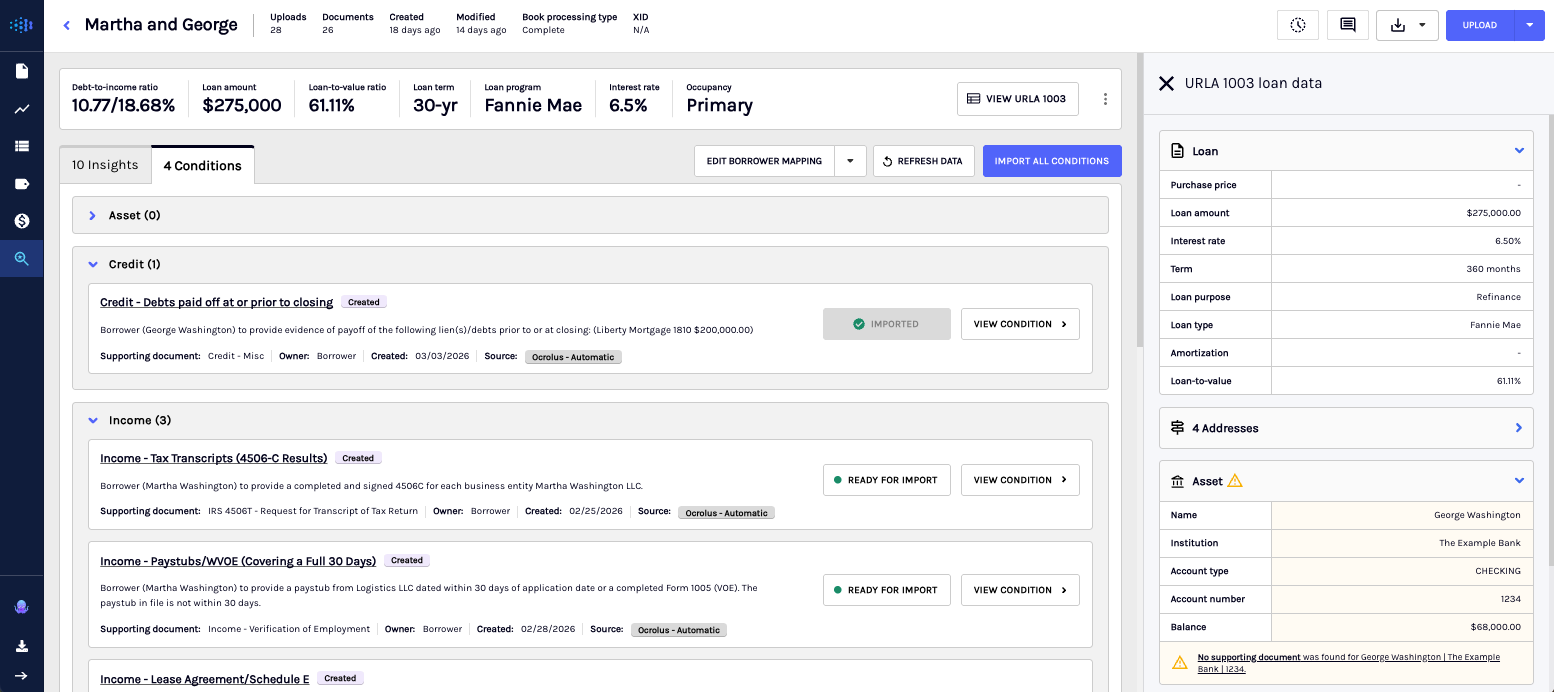
A collapsible URLA 1003 loan data panel on the right side of the screen lets you easily access the borrower's application data without leaving the Ocrolus interface. To open the panel, click VIEW URLA 1003 in the top-right corner. From this panel, you can review key information such as loan details, address information, assets, employment, borrower details, and the subject property.
The Inspect tab also displays a needs list of outstanding documents based on the generated conditions. This gives you a quick view of what documentation is still required before moving to the Conditions tab.
Insights tab
The Insights tab highlights discrepancies between the data found in borrower documents and the information reported on the 1003 application. Insights are automatically identified during document processing and displayed in a streamlined list so you can quickly review flagged items. Each insight represents a potential issue that may require human judgment to determine whether action is needed.
From this tab, you can:
- Review insights in a categorized list view, organized by type such as field mismatches, missing documentation, and unreported items.
- Open any insight to see a detailed description, the related source document displayed alongside for reference, and the corresponding 1003 data point.
- Take action on an insight by creating a condition, adding the item to the appropriate section of the 1003, or ignoring it.
- Mark insights as reviewed or defer them for later review, with tracking of the reviewer and review time.
- View previously reviewed insights, including the resolution taken, reviewer identity, and timestamp.
To learn more, see the Insights guide.
Conditions tab
The Conditions tab displays loan conditions that Ocrolus automatically generates based on processed documents, the 1003 application, and AUS findings (DU/LPA). These conditions are created without underwriter input and are reviewed across sources to remove duplicates.
From this tab, you can:
- Review all generated conditions in a list view showing the condition name, status, description, supporting document, owner, created date, and source.
- Open any condition to view detailed information such as borrower-specific descriptions, eFolder document links, guideline references, and comments.
- Import conditions into Encompass, either individually or in bulk.
- Discard conditions that are not applicable.
To learn more, see the Automated conditions guide.
Borrower mappingOcrolus automatically matches individuals identified in borrower documents to their corresponding records in Encompass. If the match confidence is uncertain, an exception screen appears, allowing you to review and confirm these matches manually. You can edit or update borrower mappings at any time, ensuring data consistency across the entire loan process.
Doc expiration tab
The Doc Expiration tab evaluates 11 tracked document types in the loan file against Fannie Mae or Freddie Mac age requirements, measured against the estimated closing date. Each document is assigned one of the following statuses: Expired, Recertification Needed, Expiring Soon, Valid, Unknown, or Pending. Where a document is expired, expiring soon, or requires recertification, a condition can be created
directly from that row.
The tab label displays a count badge showing the combined number of expired and expiring-soon documents, for example, Doc expiration (3).
From this tab, you can:
- Review the estimated closing date, days remaining, and expiration status for every tracked document in the loan file.
- Switch between Fannie Mae and Freddie Mac guidelines using the agency selector in the header. All expiration thresholds recalculate based on the selected guideline set.
- Change the estimated closing date to model a different scenario. All expiration dates and day counts recalculate immediately without a page reload. This change does not update the date in the LOS and does not persist.
- Filter documents by status using the Filter control. Pending and Unknown rows are only visible when All is selected.
- Create a condition for any expired, expiring-soon, or recertification-needed document directly from the document row.
To learn more, see Doc expiration.
Confirm borrower mapping
If Ocrolus cannot automatically match names from documents to those in Encompass, you will see a manual mapping screen. This feature helps you connect individuals with the correct borrowers easily.
- View grouped names: Review the names already grouped by Ocrolus.
- Drag and drop: Move any unmapped Ocrolus name to the correct borrower by dragging and dropping.
- Check document sources: For better decision-making, you can review the document sources related to the unmapped Ocrolus names.
- Submit your mapping: After you’ve made your selections, select Submit. Ocrolus will group individuals accordingly and identify discrepancies.
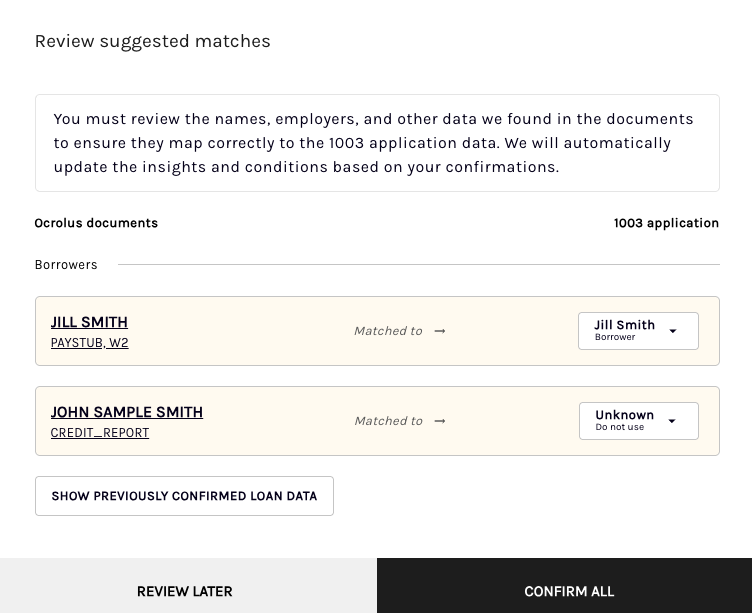
Edit borrower mapping
Once the borrower mapping is confirmed, Ocrolus calculates discrepancies automatically. You can update borrower mappings later using the Edit Borrower Mapping icon. This may be required if new documents introduce unmapped names or if you wish to proactively ensure accuracy. To edit a borrower mapping, select the Edit Borrower Mapping icon and follow the prompts. This allows you to maintain accurate and up-to-date borrower information.

Logging and audit trail
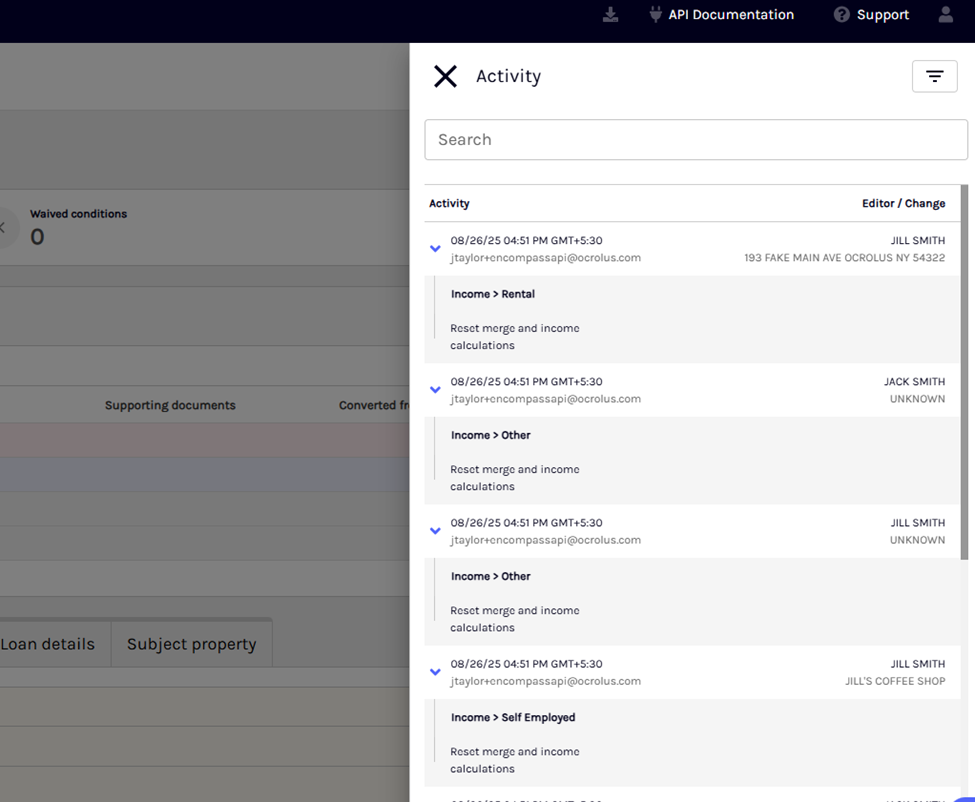
Inspect provides a comprehensive logging and audit trail, capturing all user activity around findings and conditions. This includes tracking threshold changes, who cleared or dismissed a condition, and any comments that were added, giving you full transparency and accountability across their teams.
Refresh analytics
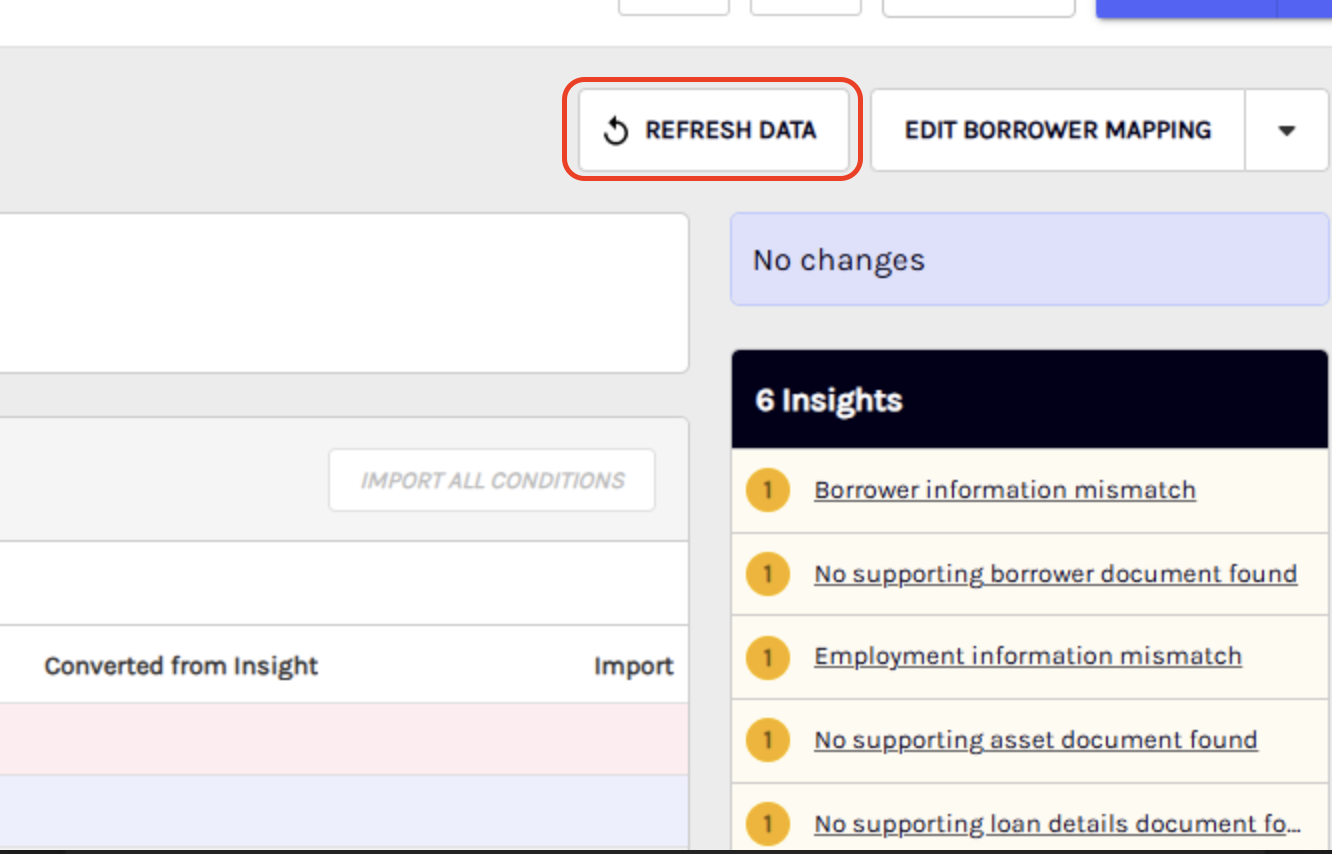
After new documents are imported, click the REFRESH DATA button to re-run analytics and surface any new findings. This manual action reprocesses the latest documents, updates insights and condition flags, and time-stamps the run so you’re always working with the most current results.
Updated about 19 hours ago